

What the Sea Takes, and How to Give It Back
Why the sea leaves skin tight and thirsty — and the simple Mediterranean ritual that restores softness after every swim.
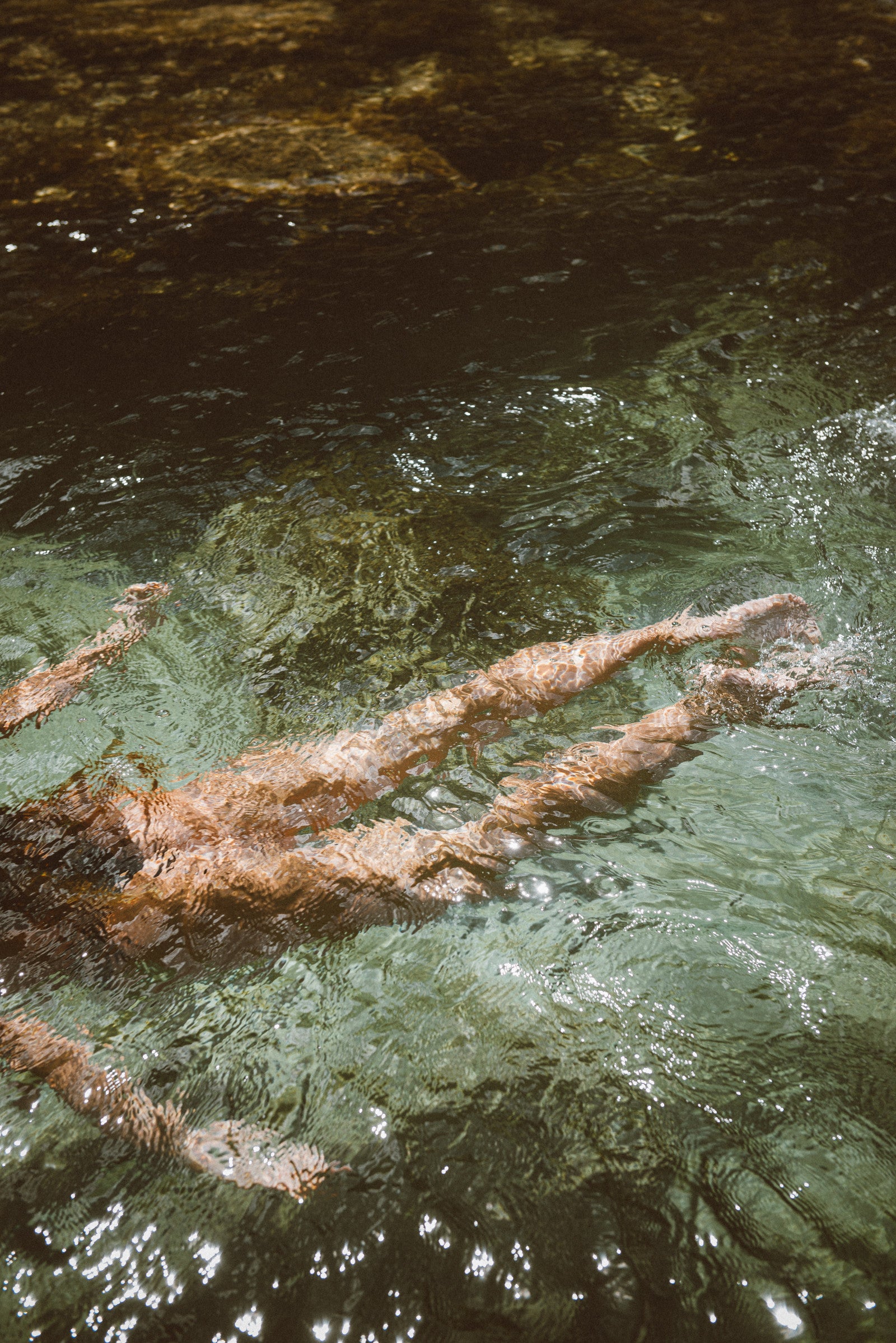
There is a particular softness to the body after a day at the sea — loose, sun-warmed, unhurried, as though the water has rinsed the week away. And then there is the skin itself: tight across the shoulders, faintly salted, thirsty in a way that no amount of seawater seems to answer. Both things are true at once, and both come from the same place.
Salt preserves because it draws water out. It is why the old cooks of the Mediterranean packed anchovies and olives in it — and it is exactly what happens on your skin after a swim. As the seawater on your body evaporates in the sun, it doesn't leave quietly; it takes moisture from the surface of your skin along with it, and leaves behind fine crystals of salt that go on drawing long after you've spread your towel on the sand. The tightness you feel is real. It is your skin, quietly dehydrating in the very place that made it feel so alive.
The good news is that the remedy is older and simpler than any product, and it takes about a minute.
Why the sea leaves your skin thirsty
Your skin is protected by a barrier — a fine layer of lipids and cells that holds water in and keeps irritation out. Salt water is hypertonic, which is a technical way of saying it is saltier than the water inside your skin. When two solutions of different strengths meet, water moves toward the saltier one; on the beach, that means moisture is gently pulled up and out of your skin toward the salt on its surface. Add sun, wind, and the friction of sand and towel, and that barrier is left thinner and more permeable than it was this morning. Skin that can't hold its own water is skin that feels tight, looks dull, and — over a summer of daily swims — can begin to feel genuinely dry.
"The sea softens everything but your skin. That part is up to you."
What the sea gives back
None of this is a case against the sea. Salt water is rich in magnesium and minerals; a cool swim calms inflammation and quiets the nervous system; its gentle exfoliation leaves skin looking polished. The Mediterranean has bathed in it for millennia for good reason. The point is not to avoid the water — it is to close the loop afterward, the way people who live by the sea always have. You swim. And then you tend to yourself.
The One-Minute Ritual
Rinse. A quick pass under cool, fresh water lifts the salt crystals off your skin before they can keep drawing moisture. Cool, not hot — hot water strips the barrier further.
Don't fully dry. Pat once with a towel, but leave your skin damp. That thin film of water clinging to you is the whole secret.
Press in oil. While your skin is still damp, warm a few drops of body oil between your palms and press — don't rub — them over your arms, shoulders, and legs. You aren't only adding oil; you are sealing the water that's already there before it can evaporate.
Why oil, and not lotion
Most lotions are mostly water, thickened and held together with emulsifiers. On skin that is already losing water, they can feel lovely for a moment and then leave — the water in the lotion evaporating right alongside the water from your skin. A true body oil works differently. It is occlusive, which simply means it forms a breathable seal that keeps the moisture underneath from escaping. Applied to damp skin, it traps that just-rinsed water against you for hours. It is the same reason skin feels so impossibly soft after a swim in a warm sea — and the reason a few drops of oil can do what a whole bottle of lotion cannot.

Nudo di Notte
An antioxidant-rich blend built around one of nature's most powerful antioxidants, drawn from the olive, with wild rosehip and essential fatty acids to replenish skin that has spent the day in sun and salt. Pressed into damp skin as the light goes gold, it turns the end of a beach day into something that feels less like repair and more like a reward.
Shop Nudo di NotteThe Mediterranean already knew
None of this is new. It is what generations along these coastlines have always done — swim, rinse, oil the skin, and sit down to a long dinner as the day cools. The ritual was never about vanity. It was about paying attention to your own body; about closing the day gently. The sea gives us so much. It asks only that we give a little back to ourselves in return.
A weekly letter on living well by the sea
The Sunday Ritual — one story, one ritual, one small pleasure. Nothing else.
